

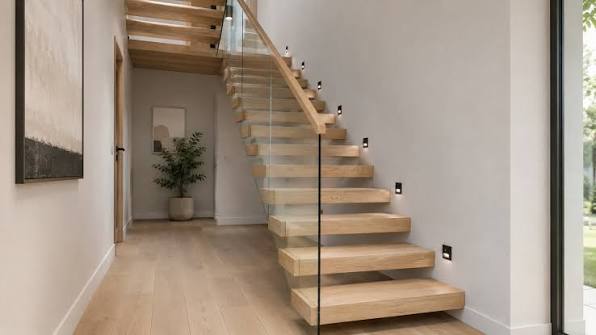
Why White Oak Stair Treads Work Well in Modern and Traditional Interiors
Selecting a stair material requires balancing appearance, wear resistance, installation needs, and compatibility with the surrounding flooring. White oak stair treads meet these requirements across many residential and light commercial projects. Their recognizable grain, neutral coloring, and ability to accept a range of finishes make them suitable for remodeling contractors, flooring professionals, homebuilders, architects, and interior designers working with varied architectural styles.
A Hardwood That Supports Different Design Styles
White oak has a generally straight grain with occasional rays and natural variations. Its appearance provides enough visual character to make a staircase noticeable without overwhelming other materials in the room.
In traditional interiors, white oak can be paired with warm stains, painted risers, turned balusters, and detailed newel posts. The grain adds depth while supporting the established character of the home.
For contemporary spaces, natural or lightly stained white oak works well with square profiles, simple railings, and restrained color palettes. It can also be combined with iron balusters, glass panels, or clean-lined wood components. This flexibility allows the same wood species to appear appropriate in both classic renovations and newly built homes.
Suitable for Frequently Used Staircases
Stairs experience concentrated foot traffic. Unlike flooring, where movement is spread across a broad surface, the same areas of each tread are used repeatedly. The selected hardwood must therefore withstand regular wear while maintaining its appearance.
White oak has a Janka hardness rating of approximately 1,360 pounds-force. This makes it slightly harder than red oak, which has a rating of about 1,290 pounds-force. Hardness alone does not determine how long a stair will last, but it provides a useful point of comparison when specifying materials for frequently used areas.
Proper installation and finish quality remain equally important. Secure attachment, accurate fitting, suitable adhesives, and a durable surface coating all contribute to the long-term performance of the completed staircase.
Retro Treads for Remodeling Projects
Retro treads are designed to fit over an existing stair structure. They are commonly used when converting carpeted stairs to hardwood without removing the entire underlying staircase.
This option can reduce demolition and simplify the renovation process. However, installers must first inspect the existing stairs. Loose, damaged, uneven, or noisy components should be repaired before the new treads are installed.
Measurements must account for the full width and depth of each step. Installers should not assume that every tread in an older staircase has identical dimensions. Walls may be out of square, and small variations can occur from one step to another.
Traditional Treads for New Construction
Traditional treads are full-thickness components intended for new staircase construction or projects where the old treads will be completely removed. They are installed directly as part of the stair structure rather than placed over an existing tread.
These treads are appropriate for homebuilders, custom stair manufacturers, and contractors completing extensive renovations. Because they become part of the primary staircase assembly, framing conditions, stringer placement, tread dimensions, and applicable building requirements must be confirmed before ordering.
Choosing between retro and traditional treads should occur early. The decision affects measurements, installation methods, project schedules, and the required accessories.
Prefinished or Unfinished?
Prefinished white oak stair treads arrive with the stain and protective coating already applied. They can reduce on-site sanding, staining, drying, and curing work. This can be helpful in occupied homes where dust, odor, and restricted stair access would create inconvenience.
Factory finishing may also provide more consistent coloring across the order. Even so, natural wood variation will remain visible and should be treated as part of the material’s character.
Unfinished treads give contractors greater control over the final color. They may be preferable when matching an existing site-finished floor or meeting a project-specific stain requirement. The tradeoff is the additional labor and time required to prepare and finish the staircase correctly.
Samples should be reviewed before the full order is approved. Stain colors can appear different depending on the wood grain, room lighting, wall colors, and surrounding flooring.
Check the Return Configuration
The exposed sides of the staircase determine the required tread configuration. A closed tread is used when both ends meet walls or closed stringers. A left-return or right-return tread includes a finished edge where one side of the staircase remains visible. Double-return configurations may be required when both sides are exposed.
Return direction should be identified while facing the staircase from the bottom. Confirming this convention with the supplier before ordering can prevent costly mistakes.
Coordinate the Complete Staircase
Treads should be selected alongside risers, landing materials, handrails, newel posts, balusters, and moulding. Using related wood species and approved finish samples can help create a consistent transition between the staircase and adjoining hardwood floors.
Before placing an order, verify tread type, measurements, return direction, finish, quantity, landing requirements, and accessory needs. Flooring dealers can use this checklist when assisting customers, while contractors and designers can include the same details in their project documentation.
For solid hardwood stair components, prefinished options, samples, and help selecting the correct tread configuration, visit Wood Stair Co and begin planning a coordinated staircase for your next project.
