

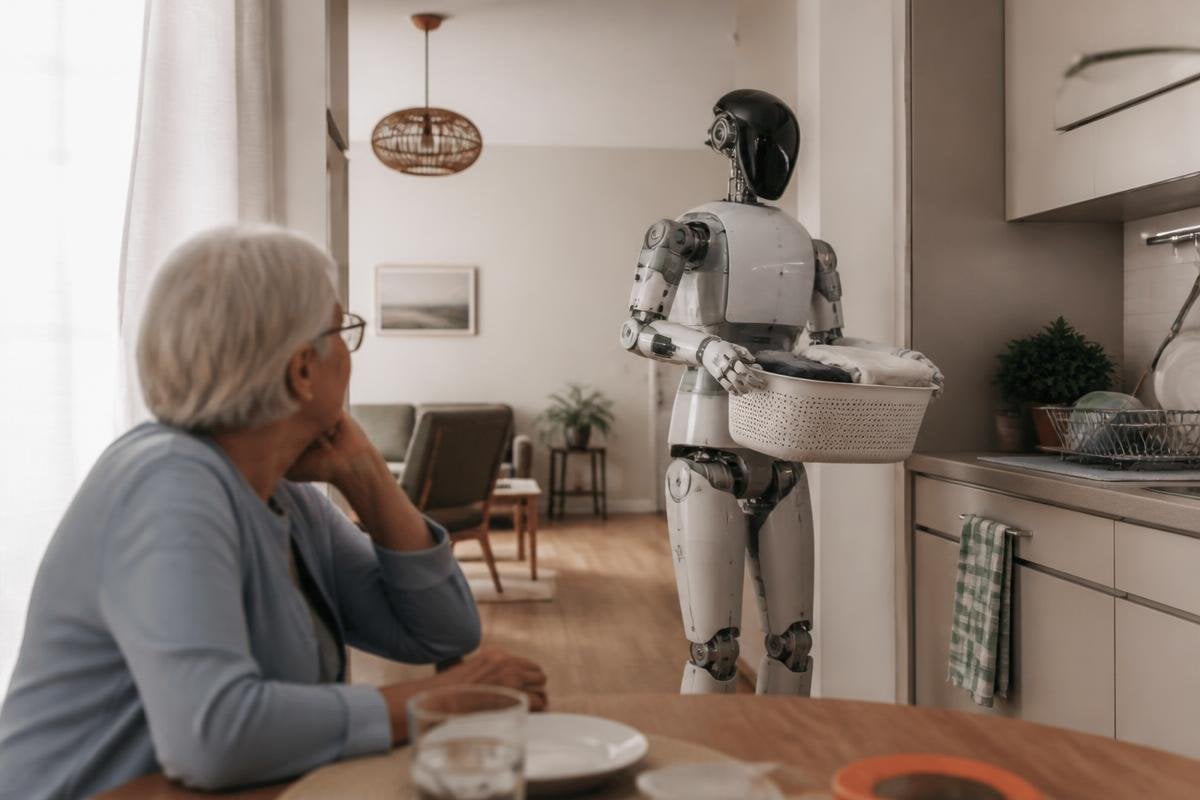
A humanoid robot could help an older person with tasks that need arms, hands, and movement through a home. The harder question is whether it can do those jobs safely, without making care feel remote or adding new work for family members.
- The best early tasks are repeatable jobs such as carrying items, fetching objects, and checking rooms.
- Safe contact, clear speech, simple controls, and a reliable stop method are required.
- Daily tasks are easier to test than loneliness, judgment, or medical care.
Where the shape helps
Many homes already contain objects made for people: door handles, shelves, drawers, kitchen tools, and light switches. A humanoid robot with a torso, arms, hands, and legs could work with those objects without needing a home rebuilt around it.
That shape does not make the robot useful by itself. The system still needs to see the object, plan its movement, hold it with the right force, and recover when something moves. A cup placed near the edge of a table is a small task for a person. For a robot, it combines vision, balance, hand control, and safe motion.
This makes household support a better starting point than open-ended care. Household support could include carrying laundry, bringing a bottle of water, moving a light object, or picking up something dropped on the floor. Each task has a clear result that a family member can check.
Older people may need help after surgery, during a period of low strength, or when stairs and falls create a daily risk. The robot could carry items between rooms or fetch a phone, reducing the need for a person to make every small trip.
The robot should not decide that someone has fallen, needs medicine, or cannot safely stand without a clear safety process behind that action. Those jobs involve health and judgment. A camera or voice system may spot a problem, but spotting one is different from knowing what it means.
Physical help also needs strict limits. Any system that lifts a person can apply force in the wrong place, lose balance, or move before the person is ready. A safer design may begin with objects and reminders, then add supervised contact tasks only after testing shows how it behaves around real homes.
The evidence for home care will sit in trial details: who tested the robot, for how long, and what happened when a person needed help outside the planned task. Reported home-care robotics coverage can help you compare those records with claims about support for older adults.
The parts that decide whether it works
A useful home robot needs more than a human-shaped frame. The parts below affect whether an older person can use it without constant technical help:
- Safe movement: The robot should slow down near people, stop when touched, and keep a stable stance.
- Clear control: Voice commands should have a screen or button backup for hearing, speech, or network problems.
- Simple recovery: If a task fails, the robot should explain the problem and wait for a new command.
- Private sensing: Cameras and microphones need clear settings for storage, access, and deletion.
- Human backup: A family member or care worker needs a way to check status and stop remote actions.
These features matter because home conditions change constantly.
A chair moves, a pet crosses the room, and a delivery leaves a box near the door. A system that works only after each room has been arranged for it will need more supervision than the task saves.
What remains unproven
The open question is the cost of keeping such a robot working. The system may need charging, software updates, repairs, network access, and help after a failed task. Those needs can turn a short daily job into a service problem.
Privacy also needs a direct answer. One that hears requests and watches rooms can gather sensitive information about health, routines, visitors, and movement. You should know where that data goes before the robot enters a bedroom or records a conversation.
I’d treat humanoid robots as task machines first, not carers. That view leaves room for useful help without asking a robot to replace human judgment or contact.
A practical trial checklist
Before a family considers a home trial, check these points:
- Write down the exact task, its location, and how often it must happen.
- Set a stop method the older person can reach without a phone.
- Ask what happens when the robot loses power, network access, or balance.
- Check who can view recordings and how long the system keeps them.
- Require a human contact for faults, repairs, and safety questions.
A good trial should measure completed tasks, failed attempts, help requests, and unwanted recordings. If the robot saves ten minutes but needs twenty minutes of supervision, the design needs more work before it belongs in a home.
