

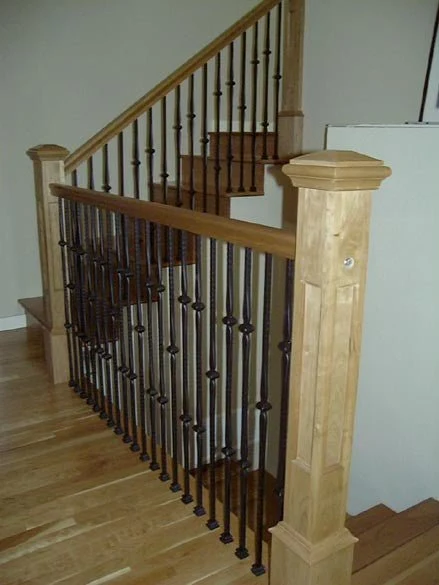
A staircase contains several visible elements that must work together, including treads, risers, balusters, newel posts, flooring, and railing components. For flooring dealers, contractors, builders, architects, and interior designers, selecting wood stair handrails is an important part of creating a connected design. The wood species, profile, stain color, finish sheen, fittings, and supporting components should be considered as one material package rather than separate purchases.
Should the Handrail Match the Stair Treads?
Matching the handrail to the stair treads is a dependable approach, particularly when the stairs connect two areas with the same hardwood flooring. Using the same species and a closely related finish can establish continuity from the floor to the staircase.
An exact match is not always required. A contrasting handrail can define the railing system and create a deliberate visual boundary. Dark wood handrails, for example, can provide strong definition when paired with natural treads, white risers, and black iron balusters.
The decision depends on the wider interior. Designers should consider:
- Hardwood flooring species and color
- Stair tread and landing finishes
- Riser color
- Baluster material
- Newel post style
- Wall and trim colors
- Cabinetry and nearby millwork
- Natural and artificial lighting
A successful contrast should appear intentional. Small differences in stain color can sometimes look like an unsuccessful matching attempt, while a clear contrast creates a more confident result.
How Should the Wood Species Be Selected?
Each hardwood species has its own color range, grain structure, and response to stain. These characteristics affect how the handrail relates to nearby flooring and stair components.
Red oak has a visible open grain and naturally warm undertones. It works well with many traditional and transitional interiors. White oak generally has a more neutral appearance and accepts many brown, natural, and cooler stain colors. Maple has a tighter grain and smoother visual character, but it can respond differently to stain than oak.
When the handrail and treads use the same species, their grain patterns are more likely to relate. However, natural variation will still be present. Solid wood components should not be expected to look identical from one piece to another.
If different species are combined, physical samples become especially important. Two woods may appear similar under one stain but show noticeably different grain and undertones once viewed in project lighting.
Why Does the Handrail Profile Matter?
The handrail profile determines both its appearance and how it feels in the hand. Profiles range from simple rounded or rectangular forms to larger designs with grooves and decorative shaping.
Traditional interiors often suit handrails with more visible contour and detail. Transitional spaces may use familiar wood profiles with simpler newels and balusters. Contemporary projects often favor cleaner lines and less ornamentation.
Scale matters as much as style. A large profile can overpower a narrow residential staircase, while a slender rail may look undersized beside substantial newel posts or wide treads. Designers should compare the rail’s actual cross section with the dimensions of the surrounding components.
The selected profile must also satisfy the project’s graspability and clearance requirements. Local codes, project specifications, and manufacturer information should be reviewed before approval.
How Do Balusters Affect the Handrail Choice?
Balusters create a repeated vertical pattern beneath the rail. Their material, size, spacing, and detailing strongly influence how the handrail is perceived.
Wood balusters can produce a traditional, coordinated railing system when matched with the handrail and newel posts. Painted wood balusters create contrast while maintaining a familiar residential appearance.
Iron balusters can shift the design toward transitional or contemporary styling. Black iron is commonly paired with natural or stained wood rails because the dark metal outlines the staircase without hiding the wood grain.
Before ordering, confirm how the balusters connect to the handrail. The rail profile may need a plow or another preparation method to accept the selected baluster system. Decorative compatibility does not guarantee construction compatibility.
What Role Do Newel Posts Play?
Newel posts anchor the railing visually and structurally at key locations. They may appear at the bottom of the staircase, at landings, at turns, or where the rail changes direction.
The size and style of the newel should relate to the handrail profile. A heavily detailed post combined with a very plain rail may appear disconnected. Likewise, a large rail can look disproportionate when attached to a narrow newel.
Post-to-post systems terminate the handrail at the sides of newel posts. Over-the-post systems use fittings that allow the handrail to travel over the newels. These systems create different visual lines and require different components, so the railing type should be selected before rail lengths and fittings are ordered.
How Can Stain and Sheen Be Coordinated?
Using the same stain name does not guarantee that separate wood components will look identical. Species, grain, sanding, finish type, application method, and lighting can all affect the final color.
A practical approval process includes:
- Reviewing samples of the actual wood species
- Comparing samples beside the flooring and treads
- Checking the color under project lighting
- Confirming finish sheen
- Reviewing expected natural variation
- Approving the combination before ordering
Sheen deserves careful attention. A high-gloss rail beside matte flooring may attract more attention than intended. Closely related sheen levels often create a calmer transition between components.
Prefinished handrails can reduce jobsite staining and coating work. Unfinished rails may be preferable when matching existing site-finished flooring or custom millwork. Installers should also plan how field cuts, joints, and fittings will be touched up.
What Must Be Confirmed Before Ordering?
Before placing the order, document the staircase layout, railing system, wood species, profile, finish, rail lengths, fittings, transitions, newel locations, and baluster type. Photographs and measured drawings can help suppliers identify missing components.
The team should also account for wall returns, landings, direction changes, starting fittings, and finished ends. Confirming these details early can prevent delays after installation begins.
A well-coordinated handrail brings the flooring, stair treads, and railing system together while providing the required gripping surface. Visit Wood Stair Co to review wood handrail profiles, compare related stair parts, and begin planning a complete material package for your next staircase project.
