

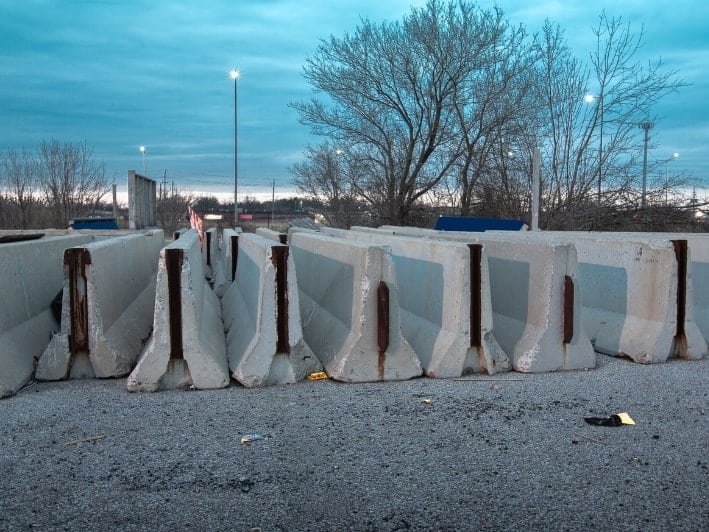
Temporary sites often need stronger boundaries when vehicles, pedestrians, workers, equipment, or public crowds are moving near one another. In these situations, cones or lightweight barricades may not provide enough separation. That is why contractors, event planners, municipal teams, venues, and logistics managers often choose jersey barrier rental for traffic control, road closures, work zones, event perimeters, and restricted-access areas.
Jersey barriers are concrete barriers commonly used to create a clear physical boundary. They are heavy, visible, and difficult to move without proper equipment, which makes them useful in settings where site control is important. They can help separate vehicles from pedestrians, protect workers near active traffic, guide drivers through temporary routes, and block unauthorized access.
For temporary projects, renting can be a practical way to get the needed protection without buying, storing, or transporting heavy concrete equipment long term.
What Jersey Barriers Are Used For
Jersey barriers are often used where vehicles need to be separated from people, equipment, or active work areas. Their main purpose is to create a strong boundary that is easy to see and hard to ignore.
On road projects, they may be used to divide traffic lanes, protect workers, close lanes, or guide vehicles through a changed route. In parking lots, they can help block off repair areas, redirect traffic, or protect temporary walkways.
At outdoor events, Jersey barriers may be used around perimeters, vehicle access points, loading zones, ticketing areas, media areas, or staff-only sections. Municipal agencies may also use them for parades, public ceremonies, street closures, and seasonal events.
Unlike lightweight crowd control barriers, Jersey barriers are made for heavier-duty site separation. They are especially useful when vehicle control is part of the safety plan.
Why Renting Can Be a Practical Option
Buying Jersey barriers may not make sense for every organization. These barriers are large, heavy, and require equipment for placement and transport. They also need storage space when not in use.
Renting allows teams to use the barriers only for the time they are needed. This can work well for short-term construction phases, road projects, public events, temporary traffic changes, parking lot repairs, or venue safety plans.
Rental also gives site managers more flexibility. A small project may need only a few barriers, while a large event or road closure may require a longer setup. Renting makes it easier to match the number of barriers to the current project.
For teams working on changing schedules, rental can also reduce planning stress. Once the project or event ends, the barriers can be picked up instead of stored on-site.
Common Places Jersey Barriers Are Needed
Jersey barriers are useful across many temporary site layouts. Contractors may use them near roads, building entrances, equipment zones, active work areas, or construction sites where vehicles pass nearby.
Municipal teams may use them during road closures, lane changes, street festivals, races, public works projects, and civic events. These locations often involve both vehicle and pedestrian movement, so clear separation is important.
Event planners and venues may use Jersey barriers to block vehicle access, protect outdoor crowds, define restricted areas, or create stronger perimeter control. They may also be placed near vendor loading zones, staff entrances, or parking areas.
Commercial sites may use them during renovations, delivery rerouting, or temporary parking changes. Logistics teams may also use them to guide vehicles through controlled routes.
What to Plan Before Renting
Before renting Jersey barriers, teams should review the full site layout. Start by identifying what needs to be separated. This could include traffic from pedestrians, workers from vehicles, public areas from restricted zones, or equipment from guest access.
Delivery access is important because Jersey barriers require proper handling. The site should have enough space for delivery vehicles and placement equipment. Teams should also confirm whether the surface is suitable for barrier placement.
Emergency routes must stay clear. Barriers should not block fire lanes, ambulance access, police access, service routes, or required exits. If openings are needed, they should be included in the plan before placement.
Timing also matters. Barriers should arrive before the site becomes active. For events, this means before guests, vendors, and vehicles begin moving through the area. For work zones, this means before crews begin working near traffic or equipment.
Pickup timing should also be planned so removal does not interfere with cleanup, road reopening, or project work.
How Jersey Barriers Support Site Control
Jersey barriers help create a site layout that is easier to understand. Drivers can see where they should go. Pedestrians can see where they should not walk. Workers and staff can operate with clearer boundaries around them.
For traffic control, barriers can help guide vehicles into the right lanes and discourage unsafe shortcuts. For pedestrian safety, they can help separate foot traffic from moving vehicles or equipment.
For access control, Jersey barriers can help block unauthorized vehicles from entering restricted spaces. They can also support security plans for large outdoor events where vehicle access needs to be limited.
When used with signs, cones, fencing, gates, or metal barricades, Jersey barriers can become part of a broader site safety setup. Each piece of equipment has a role, and concrete barriers often provide the strongest physical separation in the layout.
Final Thoughts
Jersey barriers are a practical choice for temporary sites that need stronger separation for vehicles, pedestrians, workers, equipment, or restricted areas. They can support traffic control, road closures, event perimeters, work zones, and public safety planning. Renting them gives teams access to heavy-duty barriers without the long-term burden of ownership, storage, or transport.
For contractors, event planners, venues, municipal agencies, and logistics teams that need dependable temporary barrier options, Epic Crowd Control offers crowd control and site safety equipment for many public and commercial settings. Visit the website to plan your next barrier setup with the right equipment for the job.
